

Choosing a Mining Truck Body Supplier
- Graham Thomas
- Jun 2
- 5 min read

A mining truck body supplier has a direct effect on payload, uptime, repair frequency, and total operating cost. For buyers managing haulage equipment in demanding conditions, the body is not a simple steel structure. It is a working asset that must match material density, haul road conditions, loading method, chassis limits, and maintenance realities.
The wrong choice usually shows up fast. Bodies crack early, wear liners fail in high-abrasion applications, weight distribution creates handling issues, or the body geometry slows discharge and leaves carryback. The right supplier helps prevent those problems at the specification stage, not after the truck is already in service.
What a mining truck body supplier should really provide
At a basic level, any supplier can quote a body. A capable mining truck body supplier should do more than that. The job is to supply a body that fits the application, integrates with the truck and hydraulic system, and holds up in the field without unnecessary weight or overbuilt cost.
That means understanding ore type, rock size, bucket impact, haul cycle frequency, and site maintenance practices. A body hauling coal has very different requirements from one carrying hard rock or abrasive overburden. Light material may favor volumetric capacity. Dense material may force stricter payload control and closer attention to tare weight. In many fleets, a body that looks stronger on paper can reduce productivity if it adds too much dead weight.
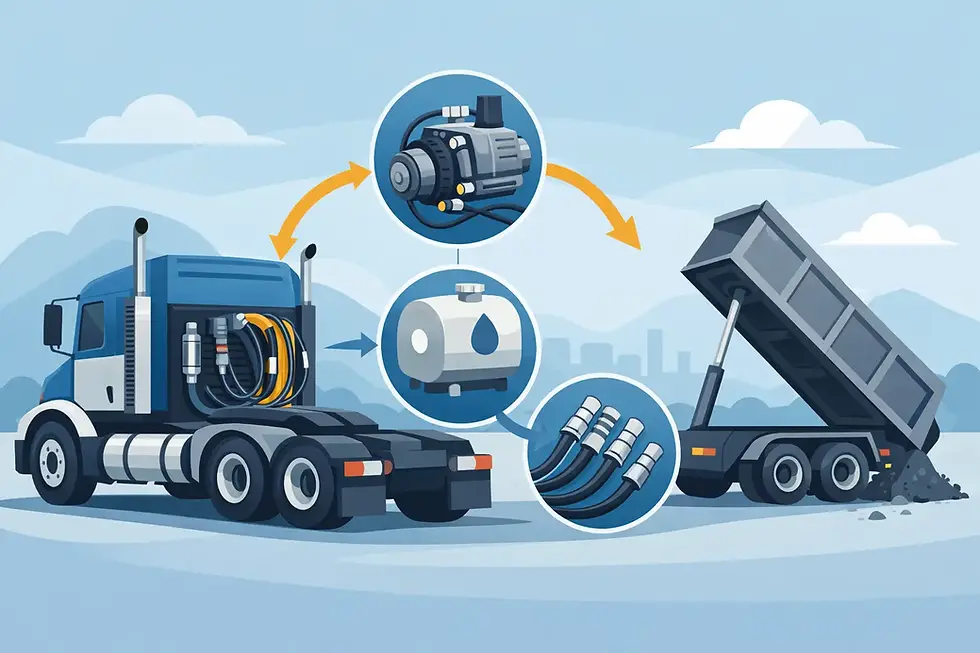
A serious supplier also understands that the body does not operate in isolation. Hoists, cylinders, hinges, subframes, wear packages, and mounting arrangements all affect performance. Buyers often benefit from working with a source that can coordinate the complete package rather than treating the body as a standalone fabrication item.
The specifications that matter before you place an order
Procurement decisions often go wrong when buyers compare only plate thickness and price. Thickness matters, but it is only one part of the design. The better evaluation starts with application data.
Material and payload profile
The supplier should ask what is being hauled, its typical density, moisture variation, and particle size. Fine, sticky material creates different discharge problems than blasted rock. High-impact loading demands reinforced strike zones and better wear management. If the material is corrosive or consistently wet, steel choice and protection details become more important.
Body geometry and capacity
Body shape affects fill efficiency, load retention, discharge speed, and carryback. A body designed for quarry rock may not perform well in a mine handling mixed material with adhesion issues. Sidewall height, floor angle, canopy design, and center of gravity all influence safety and production. The best design is rarely the largest body. It is the one that lets the truck achieve legal or mechanical payload targets consistently.
Weight versus durability
This is where trade-offs matter. A lighter body can improve payload and fuel efficiency, but only if durability remains acceptable for the duty cycle. A heavier body may extend life in severe applications, yet reduce tons moved per shift. The right answer depends on site conditions, fleet replacement planning, and whether the operation values lower capital cost, longer service life, or maximum production.
Integration with hydraulics and chassis
Body performance depends on more than steel fabrication. Cylinder capacity, tipping angle, hinge placement, PTO and pump compatibility, and frame mounting all need to be aligned. Buyers who source bodies and hydraulic components separately can run into fitment or performance issues if specifications are not coordinated from the start.
How to assess supplier capability
Not every fabricator is equipped to serve mining applications. Some suppliers are well suited to light commercial dump bodies but lack the process control, material knowledge, or technical communication required for severe-duty work.
A capable supplier should be able to discuss manufacturing methods in practical terms. That includes plate forming, weld quality control, reinforcement strategy, liner options, and tolerance management. Just as important, they should be comfortable working from client drawings, adapting designs to truck platforms, and clarifying specification gaps before production begins.
Experience across related equipment categories is also useful. Suppliers that understand truck bodies, trailers, hydraulics, cylinders, hoses, fittings, and fabrication as one system are often better positioned to prevent compatibility issues. For international buyers, this matters because sourcing delays often come from fragmented procurement rather than from one major defect.
Ningbo Han Valley International Trade Co. works in that broader OEM supply space, which is often valuable for buyers who need body fabrication along with supporting hydraulic and pneumatic components.
Customization is not optional in mining applications
Mining fleets rarely operate under uniform conditions. Even within the same site, haul routes, loading tools, and materials can vary enough to affect body design. That is why standard catalog bodies are not always the best commercial choice.
Customization does not have to mean a completely new design. It may involve wear package adjustments, liner selection, side height changes, canopy modifications, or mounting changes to suit the truck chassis. It can also mean building to customer drawings when fleet standards are already established.
The commercial value of customization is straightforward. A body that fits the application reduces premature wear, limits unplanned repair work, and supports more predictable maintenance scheduling. It also helps avoid the hidden costs of compromise designs, where a body is technically usable but creates operational inefficiencies over time.
Common buying mistakes
The most common mistake is buying on unit price without understanding lifecycle cost. A lower initial quote can become expensive if the body needs major repair early, carries less payload, or increases downtime.
Another mistake is under-specifying the duty environment. If the supplier receives only basic dimensions and truck model details, they may build to minimum assumptions. That can result in a body that fits physically but is not engineered for actual loading impact or abrasion levels.
Some buyers also overlook serviceability. Wear parts, liners, hinge areas, and reinforcement sections should be considered from a maintenance standpoint. A body that is difficult to inspect or repair can increase workshop hours and extend vehicle downtime.
Communication is another issue, especially in cross-border procurement. Clear drawings, agreed tolerances, production checkpoints, and inspection expectations help avoid disputes later. Reliable supply depends as much on process discipline as on fabrication skill.
What international buyers should ask a mining truck body supplier
For US and international procurement teams, the right questions usually go beyond the body itself. Ask how the supplier manages design confirmation, material traceability, inspection, and packaging for export. Confirm whether they can support related items such as hydraulic kits, cylinders, hoses, valves, and mounting accessories if required.
It is also worth asking how they handle custom orders. Some suppliers claim customization but only allow minor dimensional changes. Others can work from detailed fabrication drawings, adjust reinforcement layouts, and coordinate a broader equipment package. That flexibility matters for fleet operators, distributors, and body builders working to specific end-user requirements.
Lead time should be discussed in realistic terms. Shorter is not always better if it comes at the expense of specification review or production quality. For critical fleet applications, dependable scheduling is usually more valuable than an aggressive promise that slips later.
A practical standard for supplier selection
The best mining truck body supplier is not simply the cheapest or the one with the broadest brochure. It is the supplier that can translate operating conditions into a body specification that performs in service and fits the buyer's commercial priorities.
For some operations, that means maximizing payload with disciplined weight control. For others, it means accepting more body weight in exchange for longer life under severe impact. In many cases, the right solution sits between those two extremes. A good supplier will explain that trade-off clearly instead of forcing every application into the same build formula.
When buyers evaluate suppliers through that lens, the conversation becomes more useful. Instead of comparing quotes line by line, they can assess whether the supplier understands the work, can manufacture to the required standard, and can support the full equipment package around the body.
That is usually where long-term value is found - not in the first invoice, but in fewer surprises once the truck starts hauling.


Comments