

Best Truck Body Configurations for Work Fleets
- Graham Thomas
- Jul 6
- 6 min read

A truck body that looks right on paper can still create problems in service. The body may be too light for abrasive loads, too heavy for legal payload targets, or poorly matched to the hydraulic system and chassis. That is why choosing the best truck body configurations is less about picking a popular design and more about matching body structure, material, and operating cycle to the work.
For fleet buyers, body builders, and equipment specifiers, the real question is not which truck body is best in general. It is which configuration delivers the lowest cost per ton, the least downtime, and the best fit for the material being hauled. A body that performs well in quarry work may be the wrong choice for municipal waste, and a tray body suited to service access may be inefficient for bulk transport.
What determines the best truck body configurations?
The starting point is application. Material type, loading method, unloading conditions, route quality, legal axle limits, and cycle frequency all affect body selection. A short-haul aggregate unit working off-road has different priorities from a highway truck transporting grain or a service vehicle carrying tools and parts.
Payload matters, but durability and body life matter just as much. Buyers sometimes focus on tare weight alone and overlook wear patterns, floor thickness, side wall reinforcement, or hoist geometry. If the body is under-specified, higher payload on day one can quickly turn into cracking, distortion, or expensive rebuild work.
The truck chassis also sets boundaries. Wheelbase, axle spread, suspension type, frame strength, PTO capacity, and hydraulic layout all influence what body can be installed and how well it will perform. The best result usually comes when the body, subframe, cylinder, pump, and mounting method are considered as one working system.
Best truck body configurations by application
Tipper and dump bodies for bulk material
For construction, quarry, mining support, and earthmoving work, tipper and dump bodies remain the standard choice because they unload quickly and handle a wide range of loose material. Within that category, body shape and material selection make a major difference.
A square body is commonly chosen when volume is important and the load is relatively easy to discharge. It offers good capacity and straightforward fabrication, which helps with repair and replacement. The trade-off is that sticky material can hang up more easily, especially if the floor design and wall angles are not optimized.
A half-round or rounded body is usually a better fit for wet soil, demolition waste, and abrasive rock. The curved floor supports cleaner discharge and reduces material carryback. That can improve cycle times and reduce the need for manual cleanup. The trade-off is that fabrication is more specialized, and depending on the design, the body may offer less nominal volume than a square alternative.
For severe-duty work, buyers should also look closely at wear package options. Floor thickness, side thickness, high-tensile steel selection, and reinforcement around impact zones often matter more than headline dimensions. In mining and hard rock applications, a lighter body that fails early is rarely the cheaper option.
Tray bodies for service, transport, and utility use
Truck-mounted tray bodies are a practical choice when the job requires flexible loading access rather than enclosed bulk containment. They suit service fleets, equipment transport, construction support, and industrial field operations where operators need to carry palletized product, parts, tools, or machinery.
The strength of a tray body is versatility. Side and rear access can simplify forklift loading, and the deck can be configured with headboards, tie rails, ladder racks, underbody storage, and crane provisions. For buyers managing mixed-use fleets, that flexibility can reduce the need for specialized vehicles.
The trade-off is load security and environmental exposure. If the product being moved is sensitive to weather, theft, or contamination, an open tray body may need additional covers, toolboxes, or custom storage features. Deck material and tie-down layout also deserve attention, especially when the truck will carry concentrated equipment loads rather than evenly distributed freight.
Waste and specialty bodies for dedicated duty cycles
Waste handling and other specialized operations often need purpose-built body configurations rather than modified general-purpose bodies. In these cases, compaction, containment, corrosion resistance, and load retention become central to the specification.
A waste body must be designed around the collection method, disposal site conditions, and the type of waste stream. Lightweight packaging waste, construction debris, and wet refuse all place different demands on body construction. Floor design, sealing, and hydraulic performance can affect uptime as much as body shell strength.
The same principle applies to hooklift-compatible bodies, water or oil tank installations, and custom industrial units. The best configuration is usually the one designed for the duty cycle from the start, not a compromise built around short-term availability.
Material choice matters as much as body style
When buyers compare the best truck body configurations, steel grade and body material often decide long-term performance. Mild steel may suit some light-duty work and can be easier to repair, but it is not always the right option where abrasion and impact are constant.
High-tensile and wear-resistant steels allow lower body weight without sacrificing strength, and they are widely used in tipper and dump body construction for that reason. They can improve payload and extend service life, but only if the fabrication quality is correct. Poor welding practice or weak reinforcement details can undermine the benefit of better material.
Aluminum can be attractive in some transport applications where payload optimization is the priority and the hauled product is not highly abrasive. For severe aggregate, demolition, or mining service, steel usually remains the safer commercial choice.
Body shape, hoist design, and stability
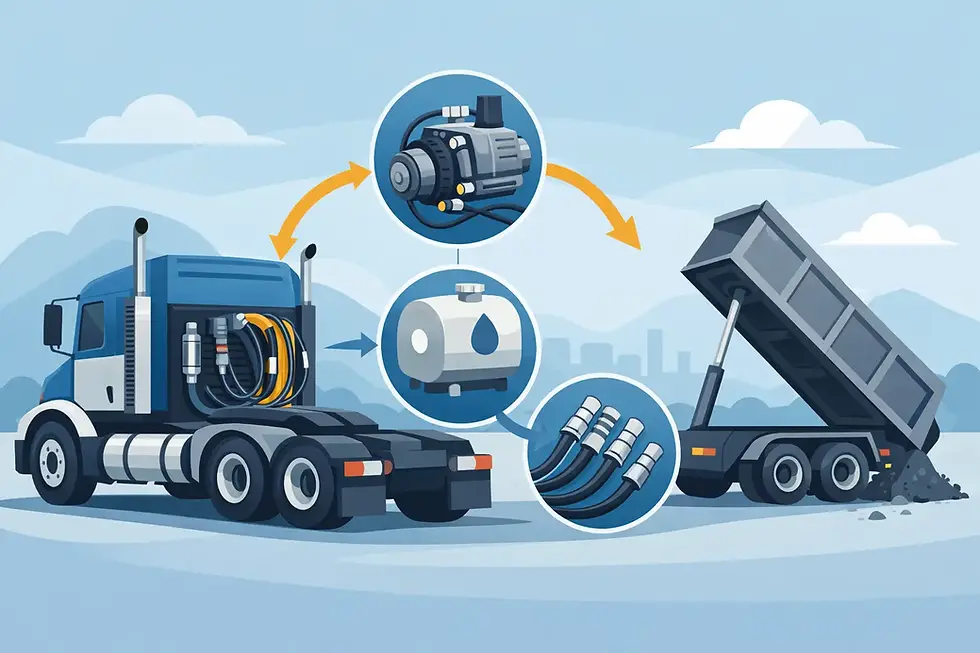
A truck body cannot be evaluated in isolation from the lifting system. Front-end cylinders, underbody hoists, PTOs, pumps, hoses, and mounting geometry all affect tipping speed, stability, and maintenance access.
For heavier-duty tipping applications, front-end cylinders are often preferred because they provide strong lifting performance and simpler underbody clearance. Underbody hoists can still be suitable in some operations, particularly where body and chassis packaging make sense, but they must be matched carefully to payload and tipping angle requirements.
Stability is another area where buyers should stay disciplined. A high-volume body may look efficient, but if the center of gravity is too high for site conditions, rollover risk increases during unloading. This is especially relevant where trucks tip on uneven ground, at transfer stations, or in off-road mining support environments. A slightly lower-capacity body with better stability can be the stronger operating decision.
How to choose the best truck body configurations for your fleet
The most reliable specification process starts with operating data, not brochures. Buyers should define average payload, heaviest material, loading equipment, daily cycles, unloading environment, and target service life. Once those facts are clear, body selection becomes more precise.
It also helps to separate must-haves from preferences. If the truck must survive abrasive quarry work, body wear performance is non-negotiable. If the vehicle serves multiple branches with changing loads, a more flexible tray or specialty layout may create better overall value than a highly optimized single-use body.
Procurement teams should also ask how the body integrates with the rest of the build. Hydraulic cylinders, pumps, PTOs, valves, hoses, subframes, and mounting hardware should be specified together. Fragmented sourcing can create compatibility problems that only appear after installation.
For international buyers, manufacturing control matters just as much as design intent. Drawings, steel grade verification, weld quality, dimensional accuracy, and packaging for shipment all affect whether the delivered body performs as expected. This is where an experienced OEM supply partner can add value by coordinating not just fabrication, but the supporting hydraulic and pneumatic systems as well.
Ningbo Han Valley International Trade Co. works in exactly this part of the market, where buyers need more than a catalog item and want truck body solutions aligned with application, chassis, and component requirements.
Common mistakes when specifying truck bodies
The most common mistake is buying for purchase price rather than operating cost. A lower-cost body that wears out early, carries less than expected, or creates hydraulic issues is rarely the cheaper asset over its working life.
The second is over-specifying for rare events. If a fleet carries extreme loads only occasionally, it may not make sense to build every unit to maximum-duty standard. Extra steel adds tare weight and can reduce commercial efficiency. The right answer depends on what the truck does most of the time, not once a quarter.
The third is ignoring serviceability. Replaceable wear parts, straightforward repair access, and standard component selection can make a meaningful difference over years of operation. For fleets that run hard, maintainability is part of the body configuration decision, not an afterthought.
The best truck body configuration is the one that fits the job, the chassis, and the commercial reality of your operation. When those three line up, the body works harder, lasts longer, and creates fewer surprises in the field.


Comments