

What Truck Body Certifications Apply in the U.S.?

A truck body can be fabricated to a high standard and still create a compliance problem if it changes vehicle lighting, axle loading, braking interfaces, or the intended use of the truck. For buyers asking what truck body certifications apply, the practical answer is that there is no single universal certificate for every dump body, tray body, service body, refuse body, or tank installation. Compliance is determined by the completed vehicle, the body configuration, the operating environment, and the party legally responsible for final-stage manufacturing.
For U.S. fleet operators, distributors, and body builders, certification should be treated as a design and documentation requirement from the start of the project. It cannot be reliably added after fabrication through a generic supplier declaration.
What Truck Body Certifications Apply to Your Build?
The first distinction is between a certification required by law, an industry standard, and a supplier quality credential. These terms are often used interchangeably, but they serve different purposes.
A legal vehicle certification confirms that a completed vehicle conforms to applicable Federal Motor Vehicle Safety Standards, or FMVSS. This responsibility generally sits with the final-stage manufacturer when an incomplete chassis is completed with a body. A body manufacturer may also carry responsibilities when it alters a completed vehicle in a way that affects compliance.
Industry standards, such as ANSI standards for particular equipment categories, may not be federal legal requirements. However, they can be specified by fleet customers, insurers, government tenders, workplace safety programs, or the body builder's own engineering policy. Quality credentials such as ISO 9001 demonstrate a supplier's management system, not that a truck body is compliant for road use in the United States.
The correct question is therefore not simply whether the body is certified. It is which standards apply to the truck after the body, equipment, hydraulics, electrical systems, and accessories have been installed.
Federal Vehicle Certification for Completed Trucks
For a new truck built on an incomplete chassis, the final-stage manufacturer must determine which FMVSS apply and affix the appropriate certification label under the applicable National Highway Traffic Safety Administration requirements. The label typically identifies the manufacturer and states that the vehicle conforms to all applicable federal safety standards in effect on the manufacturing date.
The truck body can affect several areas of FMVSS compliance. Lighting and conspicuity are common issues. A body may obstruct required lamps, reflectors, rear markings, or license plate illumination. If lamps are relocated, replacements and installation locations must meet the applicable requirements. Rear overhang, body width, and equipment mounted at the rear can all affect the lighting plan.
Weight ratings are equally critical. The completed vehicle must retain appropriate gross vehicle weight rating and gross axle weight ratings. A tipper body, water tank, tool body, or heavy crane installation can shift the center of gravity and overload an axle long before the nominal payload is reached. The body design, subframe, mounting position, hoist location, tank baffling, and equipment placement should be reviewed against axle capacity and chassis maker body-builder guidance.
Brake, steering, tire, mirror, visibility, and fuel-system requirements may also be relevant when the build affects those systems. A body builder should not assume that an unchanged chassis remains compliant if body installation modifies brake lines, electrical harnesses, rear protection, exhaust routing, fuel access, or rearward visibility.
For imported body kits or fully assembled vehicles, federal compliance responsibility must be clearly assigned before shipment. NHTSA does not provide a blanket pre-approval for ordinary truck bodies. Self-certification is based on engineering assessment, applicable testing, and manufacturer records. A CE mark, where present, does not substitute for U.S. vehicle compliance.
Altered Vehicles Need Separate Attention
The compliance path changes when a new body is installed on a vehicle that has already been certified and sold as complete. A company altering that vehicle before its first retail sale may have labeling and compliance obligations. After the first retail sale, businesses modifying a vehicle must still avoid rendering inoperative any federally required safety feature.
This matters for fleet upfits. Adding a toolbox may be straightforward, while fitting a tipping body, crane, fuel tank, or rear-mounted machine can introduce significant issues with lighting, axle loads, stability, braking interfaces, and access to safety equipment.
Certifications for Specialized Truck Bodies
Certain body types bring additional rules because they transport regulated materials or perform specialized work.
A cargo tank used to transport hazardous materials is not simply a fabricated oil tank. It may require compliance with U.S. Department of Transportation hazardous materials regulations, including applicable tank specifications, markings, pressure testing, inspection, and periodic retesting requirements. The product carried, tank construction, pressure rating, compartment arrangement, valves, vents, and emergency shutoff design all matter. A tank intended only for on-site fuel storage or non-regulated service should not be represented as a road-legal hazardous-material cargo tank without the required compliance basis.
Refuse bodies, hook lifts, roll-off systems, cranes, and aerial equipment may be subject to customer-specified or industry safety standards covering guarding, controls, interlocks, warning devices, stability, and operating procedures. ANSI standards can be particularly relevant in waste handling and lifting applications. Occupational Safety and Health Administration requirements also affect how employers operate and maintain this equipment, although OSHA compliance is not a universal truck body product certificate.
Mining applications require another layer of review. Mine-site rules, Mine Safety and Health Administration expectations, client engineering standards, and local operating conditions can exceed normal highway requirements. Fire suppression provisions, emergency isolation, guarding, access systems, and electrical protection are often specified for the individual site.
Trailers should be evaluated separately from truck bodies. Trailer and semitrailer certification, braking, lighting, conspicuity, and rear-impact guard requirements have their own federal framework. A supplier experienced with truck bodies may be able to fabricate both, but the engineering file and certification responsibilities are not interchangeable.
What Is Not a Truck Body Certification?
Several documents are useful but should not be mistaken for completed-vehicle approval. A material certificate can confirm steel grade or aluminum alloy. Welding procedure qualifications and welder qualifications support fabrication quality. Hydraulic component test reports can verify pressure performance. A load calculation can demonstrate design assumptions. None of these, by themselves, certify a truck for highway use.
Likewise, an ISO 9001 certificate, factory audit, or third-party inspection report can provide confidence in a supplier's production controls. They do not replace the final-stage manufacturer's obligation to verify applicable FMVSS compliance and issue the correct certification label.
This distinction is commercially important for importers. Buying a competitively priced body without defining certification ownership can shift expensive engineering, rework, and liability exposure to the buyer after arrival.
Build a Compliance Plan Before Releasing Production
The most effective approach is to establish the compliance scope at the quotation and design stage. Start with the chassis make, model, wheelbase, cab configuration, axle ratings, and incomplete-vehicle documentation. Then define the body type, intended payload, cargo characteristics, operating states, and destination market.
For a tipper body, this means more than selecting floor plate thickness and side height. The project should address subframe design, hoist geometry, body prop, tailgate locking, hydraulic hose protection, raised-body stability, lighting location, and loaded axle distribution. For a service body, the review may center on compartment loads, rear overhang, access steps, electrical equipment, crane capacity, and body-to-chassis mounting.
A practical technical file should include at least the approved body drawings, bill of materials, body and payload weight data, axle-load calculations, lighting layout, hydraulic and electrical schematics, welding records where required, component certificates, inspection reports, and installation instructions. The final-stage manufacturer should retain the records needed to support its certification decision.
Buyers should also confirm who supplies the certification label, who performs the final inspection, and who has authority to approve substitutions. If an overseas supplier fabricates the body while a U.S. partner completes installation, the U.S. final-stage manufacturer commonly owns the vehicle certification decision. Clear drawings, revision control, and weight data from the OEM supplier are essential to that process.
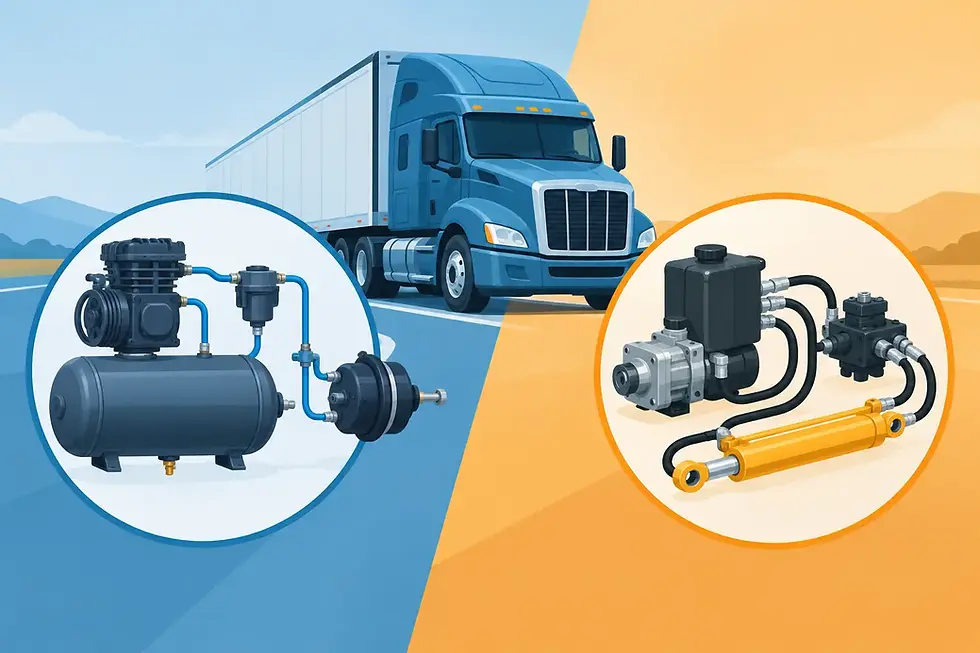
For Ningbo Han Valley International Trade Co. projects, this is where a coordinated body-and-components supply approach has value. The body, hydraulic power take-off, pump, cylinder, hoses, valves, mounting hardware, and electrical provisions need to work as one specified system rather than as unrelated purchase items.
Ask for Evidence That Matches the Application
A capable supplier should be able to provide documentation relevant to the order, not just a generic compliance statement. Request dimensioned drawings, body tare weight, material specifications, welding and coating details, component data sheets, hydraulic circuit information, quality inspection records, and packing information. For regulated applications, request the specific test, marking, or certification documentation required for that equipment category.
The buyer should then compare that evidence with chassis-maker instructions, final-stage manufacturing requirements, fleet specifications, and state or local operating rules. This is especially important when trucks cross borders or will operate in more than one jurisdiction.
The right certification path begins with a defined use case. Specify the truck, the body, the payload, the operating territory, and the party responsible for completion before production starts. That discipline protects uptime, avoids avoidable rework, and gives every party in the supply chain a clear basis for building the vehicle correctly.


Comments