

Top Semi Trailer Features That Matter to Fleets

A semi trailer rarely fails because one headline specification was missed. Problems usually begin where the trailer’s duty cycle, loading method, road conditions, and supporting equipment were not properly matched. The top semi trailer features for a commercial buyer are therefore the ones that protect payload, reduce downtime, and keep the unit fit for the work it will actually perform.
For fleet owners, body builders, transport operators, and industrial distributors, a trailer purchase is not simply a question of deck length and axle count. The specification affects loading speed, maintenance access, tire life, fuel use, compliance, and residual value. A well-built trailer should be evaluated as a working system, with the chassis, suspension, braking, body structure, and connection points considered together.
Top Semi Trailer Features Start With the Chassis
The main frame carries the consequences of every load cycle. Material grade, beam design, crossmember spacing, welding quality, and reinforcement around concentrated loads all deserve close review. A trailer that looks adequate on paper can still be poorly suited to repeated point loading, rough access roads, or uneven loading patterns.
For general freight, a lighter tare weight may improve payload potential and operating economics. For mining support, construction materials, heavy machinery, or waste applications, greater structural capacity may be the better commercial decision. The correct balance depends on legal gross weight limits, the density of the cargo, loading equipment, and how often the trailer operates off paved roads.
Pay particular attention to the gooseneck, kingpin area, suspension hangers, landing gear mounting points, and the rear section of the frame. These areas experience high stress and are difficult to rectify once a trailer is in service. If the trailer will carry machinery, coils, containers, or other concentrated loads, the supplier should understand the load positions and tie-down plan before fabrication begins.
Suspension and Axles Must Match the Route
Suspension selection has a direct effect on ride, stability, component life, and cargo protection. Mechanical suspension remains a practical choice for many demanding applications because of its straightforward design, durability, and service familiarity. Air suspension can offer improved ride quality, adjustable deck height, and better load protection, but it requires appropriate maintenance and reliable air-system management.
Neither option is automatically superior. A fleet running mostly highway miles with sensitive or high-value freight may gain clear value from air suspension. A trailer operating in harsh, remote, or heavily contaminated environments may prioritize simplicity and resistance to damage. Axle ratings, track width, wheel-end selection, and suspension capacity must be specified as a package rather than selected independently.
Buyers should also consider tire and wheel configuration early. Tire size influences deck height, replacement availability, load rating, and operating cost. Wide-base tires can reduce weight and simplify wheel-end management in some applications, while duals may provide operational familiarity and redundancy. The right decision depends on local service support, payload targets, road conditions, and fleet maintenance practices.
Braking and Stability Equipment
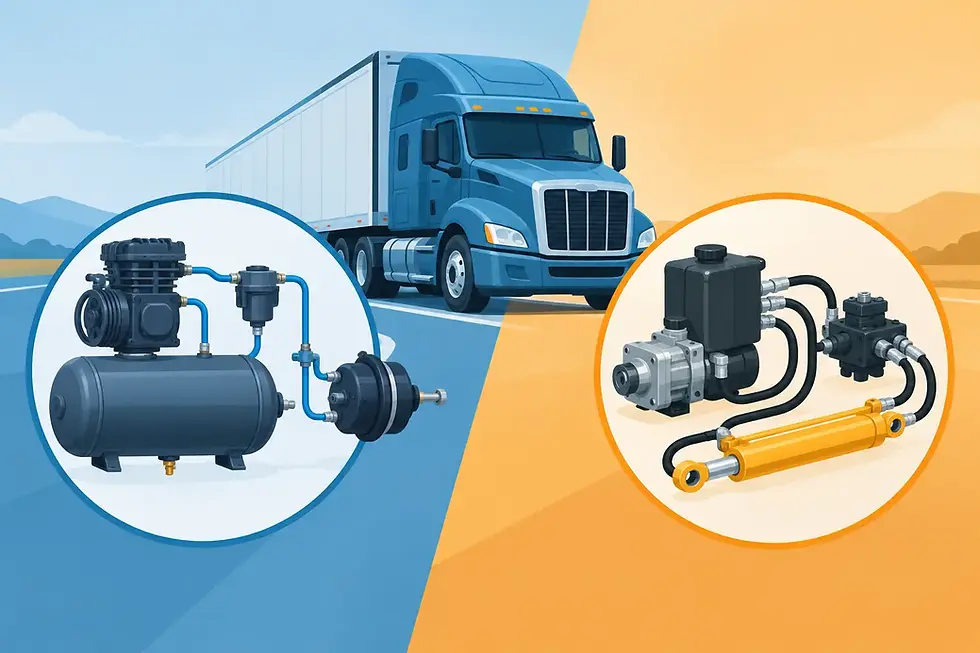
Reliable braking hardware is a baseline requirement, not an optional upgrade. Select components with proven availability in the intended market and make sure the brake system is compatible with the prime mover and local regulations. Air brake configuration, chambers, slack adjusters, ABS, electrical connections, and emergency breakaway functions should be reviewed before production, especially for export programs.
Electronic stability systems can be valuable where trailers regularly encounter uneven loading, high centers of gravity, or demanding road conditions. Their value is strongest when they are paired with correct loading procedures and appropriate suspension setup. Technology cannot compensate for an unsuitable chassis, overloaded axles, or poor weight distribution.
Cargo Area Design Determines Daily Productivity
A trailer’s cargo area should suit the product being moved and the way it is loaded. Flatbeds, drop decks, low loaders, skeletal trailers, side tippers, walking-floor units, bulk trailers, and specialized bodies each solve different operational problems. The productive choice is the one that reduces handling time without adding unnecessary weight or maintenance burden.
For flatbeds and platform trailers, deck material, crossmember layout, stake pockets, rub rails, winch tracks, and lashing points are central features. Hardwood, steel, aluminum, and composite deck options each involve trade-offs in weight, grip, repairability, and moisture resistance. If forklift traffic is expected, deck capacity and localized reinforcement should be confirmed rather than assumed.
For lowbed and machinery transport applications, deck height, ramp design, approach angle, hydraulic functions, and load restraint points require careful coordination. A lower deck can improve clearance for tall equipment, but it may reduce ground clearance and increase exposure to damage on poor roads. Detachable goosenecks, hydraulic ramps, and steering axles can improve loading flexibility, although they also increase purchase cost and service complexity.
Bulk, waste, and specialized transport trailers need equal attention to body wear areas, discharge systems, sealing, and cleanout access. Abrasive materials may justify wear plate, reinforced floors, and replaceable liners. Wet or corrosive loads may require specific coatings, drainage arrangements, and compatible materials. The lowest initial-cost body can become expensive quickly if it is difficult to clean, repair, or protect from corrosion.
Securement, Access, and Safety Features Matter
Cargo security features must be placed where operators can use them safely and consistently. A high quantity of tie-down points does not help if their load rating is unclear, their location conflicts with the cargo, or they are inaccessible during loading. Specify rated lashing rings, chain slots, stake pockets, winches, and rub rails according to the actual restraint method used by the fleet.
Safe access is equally practical. Non-slip walkways, grab handles, ladder arrangements, handrails, and properly located steps reduce exposure during inspections and load checks. Lighting should support both legal compliance and the work environment. LED lamps, protected harness routing, sealed connectors, and clear marker placement can reduce recurring electrical faults in wet, dusty, or high-vibration service.
Other worthwhile details include mudguards, spray suppression, side guards where required, conspicuity markings, wheel chocks, and storage for chains or load restraints. These are modest items compared with the chassis cost, yet they can improve operator efficiency and reduce preventable damage.
Connection Points and Serviceability Should Be Specified Early
The trailer must connect cleanly with the tractors already in the fleet or with the equipment planned for deployment. Kingpin size and setting, fifth-wheel height, electrical socket configuration, air couplings, hydraulic lines, and auxiliary connections need confirmation before manufacture. This is especially relevant for trailers with hydraulic steering, lifting axles, moving floors, tipper functions, or specialized loading equipment.
Serviceability should receive the same attention as first-day appearance. Accessible grease points, protected hose routing, standardized fasteners, replaceable wear components, and clear maintenance documentation support uptime over the life of the trailer. Where a trailer uses hydraulic or pneumatic systems, hose lengths, fitting standards, valve placement, and cylinder service access should reflect the maintenance resources available to the customer.
For international buyers, component selection should also consider parts availability in the destination market. A premium component that cannot be replaced locally may create more downtime than a widely supported alternative. OEM-grade supply is not only about the original build quality. It is also about maintaining the equipment efficiently years later.
Custom Specification Is Often the Best Feature
The strongest trailer specification is rarely an off-the-shelf list of options. It is a documented response to the operating environment. Before placing an order, buyers should provide expected payload, cargo dimensions and density, loading method, route conditions, regulatory requirements, tractor details, and any preferred component brands. Photos, drawings, and examples of the current equipment can identify problems that a standard quotation will overlook.
A capable supply partner can coordinate the complete package: fabricated trailer structure, body equipment, hydraulic and pneumatic assemblies, hoses, fittings, valves, landing gear, lighting, and supporting accessories. This reduces the risk of mismatched interfaces and gives the buyer clearer responsibility across the build. Ningbo Han Valley International Trade Co. supports this kind of OEM-focused coordination for buyers requiring tailored heavy-duty equipment and related systems.
The right trailer is the one that performs predictably in its intended duty cycle, can be maintained with available resources, and continues to earn its place in the fleet after the first years of service. Start with the job, specify the details that affect it, and let the equipment design follow.


Comments