
What Is a PTO System on a Truck?

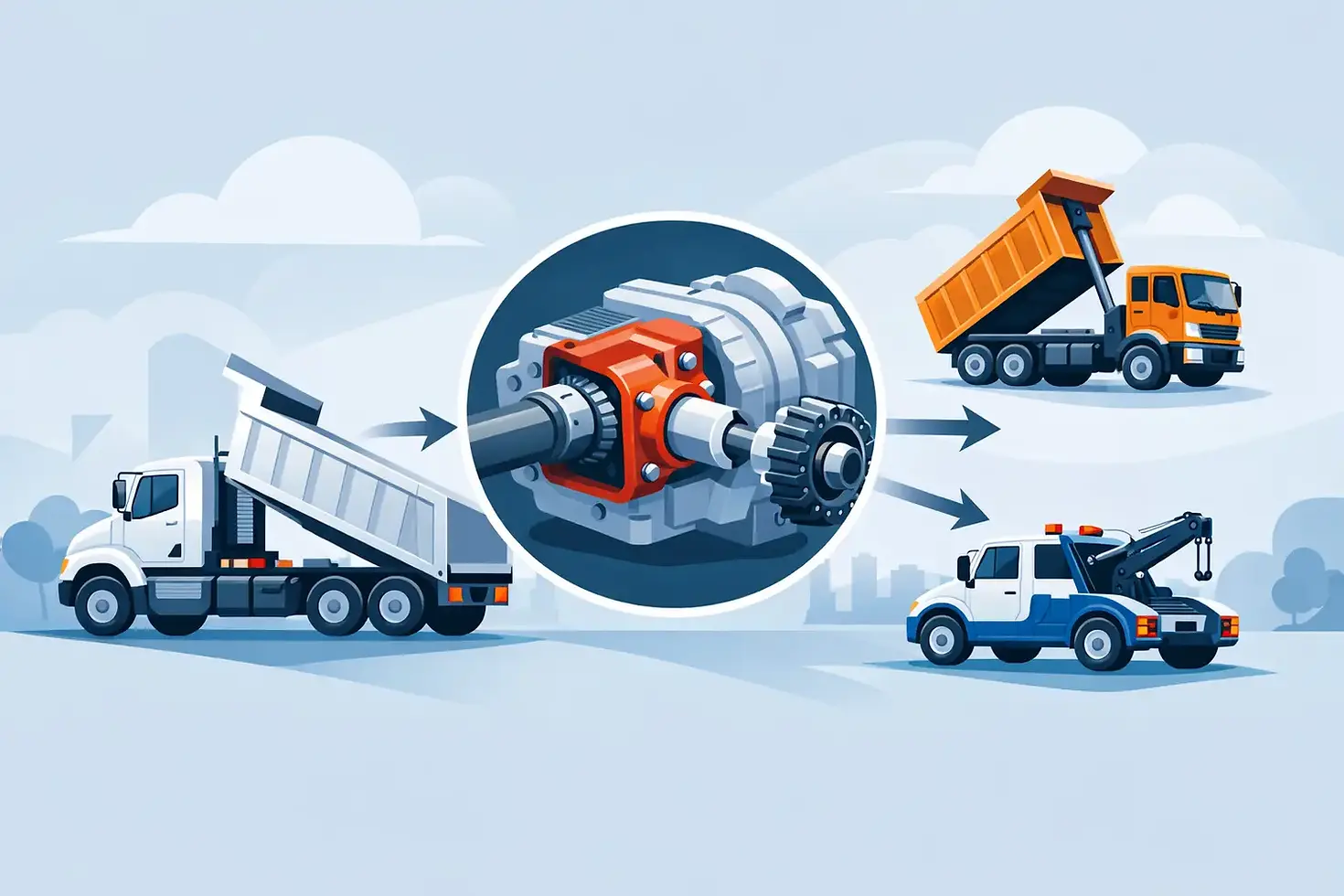
When a dump body raises, a tanker pump unloads, or a vacuum unit starts working without a separate engine, the same component is usually behind it. If you are asking what is a PTO system, the practical answer is simple: it is the mechanism that transfers power from a truck or transmission to auxiliary equipment so the vehicle can do more than drive.
For fleet buyers, body builders, and equipment specifiers, that simple definition is only the starting point. PTO selection affects hydraulic performance, installation layout, operating safety, maintenance demands, and long-term uptime. A PTO that is correctly matched to the truck and the application will deliver stable power and predictable service life. A poor match can lead to overheating, sluggish cycle times, gear damage, pump failure, and unnecessary downtime.
What is a PTO system and what does it do?
A power take-off, usually called a PTO, is a device mounted to a vehicle transmission or engine interface that redirects mechanical power to auxiliary equipment. In truck applications, that power is commonly used to drive a hydraulic pump, though some PTO systems also operate mechanical shafts, water pumps, blowers, compressors, or other work equipment.
The PTO system is not just the PTO unit itself. In most working trucks, the full system includes the PTO, the compatible transmission opening or drive provision, the hydraulic pump or other driven component, the control method, and the supporting hoses, valves, reservoirs, fittings, and mounting hardware. In other words, the PTO is the power source connection, but the PTO system is the complete working arrangement.
That distinction matters during procurement. Buyers sometimes focus on PTO model numbers alone, but performance depends on how the entire system is specified. Torque requirements, gear ratio, pump displacement, engine speed, duty cycle, and installation space all need to be considered together.
How a PTO system works on a truck
In basic terms, the PTO engages with a driven gear in the transmission or another approved drive point. Once engaged, it transfers rotational energy from the engine drivetrain to the attached equipment. If the PTO is driving a hydraulic pump, that pump converts mechanical rotation into hydraulic flow, which then powers cylinders, motors, hoists, walking floors, winches, compactors, or other hydraulic functions.
The operator usually activates the PTO through an electric, pneumatic, cable, or hydraulic control, depending on the vehicle and setup. On many commercial trucks, engagement is managed through a switch in the cab combined with interlocks that help prevent improper operation. Some systems are designed for stationary use, while others are intended for mobile operation where auxiliary equipment must run while the vehicle is moving.
This is where specifications become critical. A PTO can only deliver power within the limits of the transmission, engine operating range, and the PTO’s own rating. If the application demands high continuous torque or precise hydraulic output, the wrong ratio or undersized unit will quickly show its limits.
Main types of PTO systems
Not every PTO system is built the same, and the correct type depends on the truck platform and the work being done.
Transmission-mounted PTOs are among the most common in vocational truck applications. They connect to an opening on the transmission and are widely used to drive hydraulic pumps for dump trucks, hooklifts, refuse bodies, wreckers, and service equipment. They are popular because they are compact, proven, and relatively straightforward to integrate when the transmission supports PTO provision.
Engine-mounted PTOs are often used where higher continuous power is required or where transmission limitations make that a better choice. These systems can be suitable for demanding applications such as large hydraulic packages, vacuum equipment, or specialty bodies that need sustained power output.
There are also split-shaft PTO systems, which are used in some severe-duty or specialized setups. These are typically installed in the driveline and can deliver power to auxiliary equipment independently of certain transmission constraints. They are useful in particular applications, but they require more installation planning and are not the default answer for every truck.
The important point for buyers is that PTO type should follow the duty profile, not the other way around. A familiar part number is not enough if the truck, transmission, and equipment package have changed.
Common applications for PTO systems
In the heavy vehicle market, PTO systems support a wide range of body and equipment functions. Dump trucks use them to power hydraulic pumps that raise and lower bodies. Tank trucks use them for transfer pumps. Refuse vehicles rely on PTO-driven hydraulics for packer functions and bin lifting systems. Recovery trucks, crane trucks, vacuum units, live floor trailers, and service bodies also depend on PTO power in many configurations.
Mining and waste applications often place especially high demands on the system because the equipment may operate in harsh conditions, at high duty cycles, or under heavy loads. In these environments, component matching and build quality become even more important. A low-cost choice that looks acceptable on paper may carry a much higher operating cost if it causes premature wear or repeated interruptions in service.
What buyers should check before specifying a PTO system
The first question is not which PTO brand to buy. It is what the equipment needs the truck to do.
Start with the power demand. That means understanding required torque, horsepower, hydraulic flow, and pressure. A tipping body with short cycle times has different needs than a blower system or a vacuum truck running for extended periods. Then check the truck platform itself, including engine characteristics, transmission model, PTO openings, rotation direction, space constraints, and electronic control compatibility.
Duty cycle is another area where mistakes happen. Some systems perform well for short intermittent use but are not intended for long continuous operation. Heat buildup, lubrication limits, and gear loading all matter. If the equipment will run daily for extended periods, the PTO system should be specified for that service level from the start.
Pump matching is just as important. The PTO ratio needs to work with pump displacement and expected engine speed to produce the required hydraulic flow. If the ratio is too high or too low, you may end up with weak performance at normal idle or excessive pump speed at operating RPM. Either problem can shorten component life.
Control logic should also be reviewed. Modern fleets may require safety interlocks, remote enable functions, neutral checks, or integration with body controls. The more complex the truck and body package, the more important it is to treat the PTO as part of a larger system rather than a standalone component.
Why PTO system matching affects uptime
A PTO system is one of those assemblies that works quietly when it has been specified correctly. When it has not, the issues tend to show up fast in the field.
Common failures often trace back to mismatch rather than manufacturing defect. Overloading can strip gears or damage bearings. Poor alignment can stress shafts and pump mounts. Incorrect hose sizing or hydraulic layout can create heat and reduce efficiency. Inadequate control logic can allow improper engagement, which may damage the PTO or transmission.
For procurement teams and fleet operators, that is why specification accuracy matters as much as product quality. The lowest upfront cost may not be the most economical option if installation changes, repeated repairs, or lost operating hours follow. A PTO system should be judged on fit-for-purpose performance over time, not just on purchase price.
This is also where an experienced supply partner adds value. Buyers often need support across the full package, including PTOs, pumps, valves, hoses, cylinders, and the working body itself. When those items are sourced with a clear understanding of the application, the result is usually a cleaner installation and fewer field issues.
Maintenance and service considerations
Even a well-matched PTO system needs routine attention. Lubrication requirements should follow the manufacturer’s specification and the transmission setup. Mounting fasteners, controls, seals, and pump connections should be checked regularly. Operators should also be trained on correct engagement procedures, since misuse can shorten service life even when the hardware is sound.
It is also worth planning for parts support. A PTO system on a critical vehicle is not just a component purchase. It is part of an uptime strategy. Service access, replacement lead times, and compatibility with standard fleet components should all be considered before a model is approved for broader use.
For many B2B buyers, the best approach is to standardize where practical but stay flexible where the application demands it. That balance helps control inventory and maintenance complexity without forcing one PTO specification into every truck type.
When a standard PTO is not enough
Some applications fall outside standard catalog assumptions. Limited chassis space, unusual pump requirements, dual-output needs, export vehicle differences, or specialized body controls may call for a custom-configured solution. In these cases, getting the right result usually depends on coordinated review of the truck, body, hydraulic circuit, and operating conditions.
That is often the difference between simply buying a PTO and sourcing a working PTO system. Companies such as Ningbo Han Valley International Trade Co. operate in that space, where the requirement is not just a part on a shelf but a specification-led package aligned with the equipment build.
If you are evaluating truck bodies, hydraulics, or auxiliary drive components, the useful question is not only what is a PTO system. It is whether the PTO system you specify is truly matched to the work, because that decision shows up later in cycle time, maintenance cost, and whether the truck is ready when the job starts.


Comments