

Mining Fleet Electrification for Practical Buyers

A mine truck can spend its working life climbing loaded, braking downhill, idling at loading points, and operating in dust, heat, vibration, and uneven ground. That duty cycle makes mining fleet electrification more than a change of power source. It changes how fleets specify bodies, auxiliary systems, charging infrastructure, maintenance support, and replacement parts.
For fleet owners, body builders, and procurement teams, the central question is not whether electrification is coming. It is whether a specific electric vehicle and its supporting equipment can deliver payload, availability, safety, and serviceability in the conditions where it will operate. The answer depends on the mine, the route, the production schedule, and the quality of the complete equipment specification.
Why Mining Fleet Electrification Is a System Decision
Electric drive can reduce diesel consumption, local exhaust emissions, and certain maintenance demands. In suitable applications, regenerative braking on downhill hauls can also recover energy and reduce brake wear. Those benefits are meaningful, but they do not eliminate the engineering work required before equipment is ordered.
A diesel fleet has established fueling routines, familiar maintenance practices, and a broad parts ecosystem. An electric fleet introduces battery state-of-charge management, charger location, grid capacity, electrical safety procedures, thermal management, and new diagnostic requirements. The truck body and its auxiliary systems must fit within that wider operating model.
This is particularly relevant for tipper bodies, dump bodies, water tanks, service bodies, and specialized support vehicles. A body that is well suited to a conventional chassis may require changes when installed on an electric platform. Vehicle mass distribution, frame mounting points, available space for electrical hardware, and auxiliary power demand all need review before fabrication begins.
Start With the Duty Cycle, Not the Vehicle Brochure
The strongest electrification programs begin with operating data. Procurement teams should examine the actual work rather than rely on nominal vehicle range or headline battery capacity.
Haul distance, road grade, rolling resistance, payload, cycle time, ambient temperature, and shift pattern affect energy consumption. A truck traveling a short, repeatable route with planned dwell time may be a strong candidate for depot or opportunity charging. A vehicle working across a large, changing mine site may need a different charging strategy, battery configuration, or hybrid transition plan.
Payload remains a commercial issue. Batteries add mass, and that can reduce legal or practical payload if the chassis, axle ratings, and body design are not carefully matched. A lighter but durable body can help protect carrying capacity, but it must still withstand impact, abrasion, and repeated loading cycles. Material selection, floor thickness, sidewall design, liner options, and reinforcement layout should be evaluated against the material being carried.
The duty cycle also determines whether body-mounted equipment should use electric drives, electro-hydraulic systems, or a dedicated hydraulic power unit. Tipping, pumping, lifting, compaction, and tool operation all draw energy. Small auxiliary loads can become significant when multiplied across long shifts.
Charging Time Is Productive Time Planning
Charging cannot be treated as a task that happens after the vehicle returns to the yard. On a mine site, charger placement affects truck movement, queueing, operator behavior, and production continuity. If charging is required during shifts, the schedule must allow for it without creating bottlenecks at load or dump points.
High-power charging may reduce charging time, but it can increase site electrical infrastructure costs and place additional demands on battery thermal management. Battery swapping can suit some controlled operations, although it requires standardized packs, lifting equipment, storage, and disciplined handling processes. There is no universal solution.
For many fleets, the practical approach is phased deployment. Start with vehicles that have predictable routes and a manageable return-to-base pattern, then use operating data to refine the next phase. This limits exposure while giving maintenance and operations teams time to build competence.
Body Design Must Support Electric Chassis Requirements
Mining bodies are not passive structures. They influence payload, stability, service access, maintenance time, and vehicle life. With electric trucks, body design must also respect high-voltage component locations, battery enclosures, cooling lines, cable routing, and manufacturer-defined mounting restrictions.
A body builder should receive complete chassis information before finalizing the design. This includes frame dimensions, body mounting zones, axle loads, center-of-gravity limits, electrical interface details, and service clearance requirements. Drilling, welding, or adding brackets in restricted areas can compromise chassis warranty, battery protection, or electrical safety.
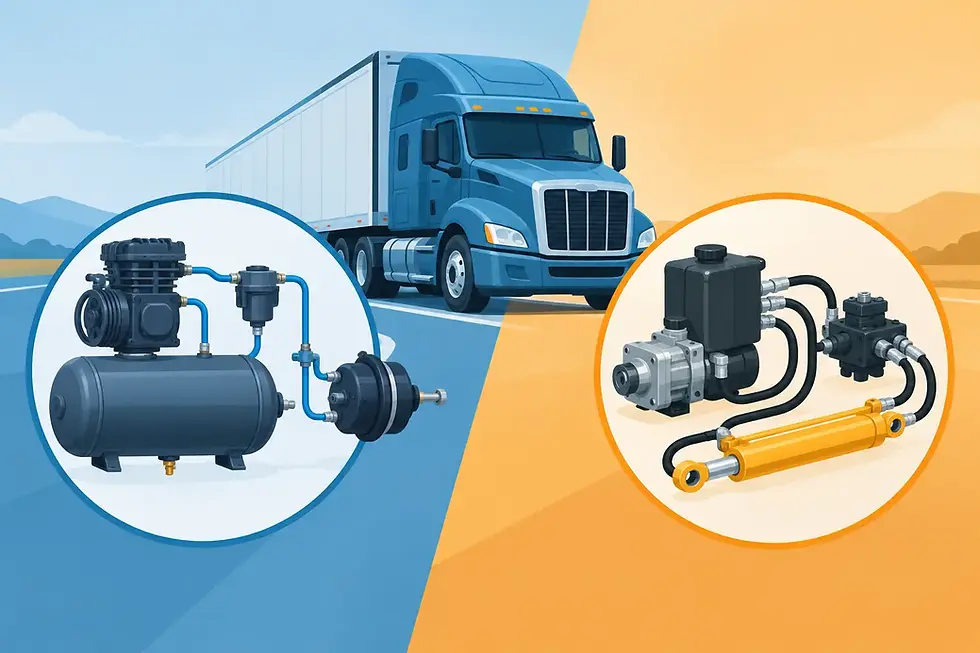
Tipping bodies require particularly close attention. The hydraulic system must provide the required lifting force and cycle speed without excessive energy draw. Cylinder sizing, pump selection, PTO availability, reservoir capacity, hose routing, and valve control strategy need to match the electric chassis architecture. Some platforms may use an electric hydraulic power pack rather than a conventional transmission-driven PTO.
That choice has trade-offs. An electric hydraulic unit can be easier to package on some chassis and can operate independently of a conventional engine speed. However, it adds electrical demand and requires proper protection from dust, water, impact, and heat. Hydraulic component selection still matters: cylinders, pumps, hoses, fittings, filters, and valves must be specified for pressure, duty cycle, fluid temperature, and contamination control.
Maintenance Changes, but It Does Not Disappear
Electric drivetrains generally have fewer routine engine-related service items than diesel vehicles. That does not mean maintenance becomes simple. The work shifts toward high-voltage inspection, battery cooling systems, charging connectors, insulation monitoring, control software, and electrical fault diagnosis.
Mine maintenance teams need safe isolation procedures, appropriately rated tools, trained technicians, and a clear escalation path for battery or drivetrain issues. Spare-part planning should account for long-lead electrical components as well as familiar wear items such as body pivots, hydraulic seals, hoses, suspension parts, and tailgate hardware.
Dust and vibration remain demanding regardless of drivetrain. Electrical connectors, cable supports, sensor housings, and enclosures should be selected and installed for the actual environment, not just a clean-shop rating. A component that performs well on a paved urban route may not remain reliable on rough haul roads.
Procurement Should Evaluate the Full Operating Cost
The purchase price of an electric truck or body is only one part of the decision. Buyers should compare total operating cost across energy, charging infrastructure, maintenance labor, replacement components, downtime exposure, financing, and expected asset life.
The case for electrification is often strongest where diesel fuel is costly to deliver, routes are repeatable, electricity can be secured at a workable rate, and the mine has clear emissions or ventilation objectives. It may be less favorable where equipment operates far from reliable power, duty cycles are highly variable, or site infrastructure cannot support charging without major capital work.
Supplier coordination is therefore essential. The chassis supplier, body manufacturer, hydraulic supplier, electrical contractor, and fleet operator need compatible drawings, specifications, and responsibilities. Late design changes can be expensive when battery packaging or chassis interfaces are involved.
Ningbo Han Valley International Trade Co. supports this type of equipment planning through customized body fabrication and supporting hydraulic and pneumatic component supply. For buyers sourcing across international markets, the value is in obtaining a body and component package that is built to the application rather than assembled from loosely matched parts.
A Practical Path Forward
Mining fleet electrification will advance at different speeds across haulage, service, water, waste, and support applications. Buyers should avoid treating every truck as the same case. A carefully chosen pilot vehicle can produce better information than a broad commitment based on assumptions.
Specify the operating duty first, confirm the chassis interfaces, calculate the auxiliary energy demand, and verify that charging and maintenance plans support the production schedule. When the body, hydraulic system, and electrical architecture are considered as one working package, electrification becomes a controlled equipment decision rather than an operational gamble.


Comments