

Best Mining Service Bodies for Heavy-Duty Fleets

A service truck that cannot safely carry tooling, lubricants, recovery gear, and critical spare parts is not an asset in a mine. It is a source of delays. The best mining service bodies are built around the actual maintenance work performed on site, the chassis available, and the conditions that shorten equipment life: rough haul roads, abrasive dust, heavy loads, and long operating shifts.
For fleet owners, body builders, and equipment buyers, the right specification is rarely the most heavily optioned body on paper. It is the one that gives technicians safe access to the equipment they use every day, protects valuable inventory, stays within chassis and axle limits, and can be supported over the service life of the truck.
What Defines the Best Mining Service Bodies?
Mining service bodies are purpose-built truck bodies that support field maintenance, repair, lubrication, fueling, welding, and recovery work. They may carry compressors, generators, cranes, fluid tanks, hose reels, tool storage, and hydraulic equipment. In many operations, they function as mobile workshops serving haul trucks, loaders, drills, crushers, and auxiliary equipment far from the main workshop.
The best body is therefore a fit-for-purpose system, not simply a fabricated tray with compartments. It must match the duty cycle. A light maintenance vehicle used on established mine roads has different requirements from a fully equipped field service truck operating in remote open-pit conditions. Body selection should start with the service task, then move to capacity, layout, material selection, and supporting systems.
A practical body specification needs to balance five priorities: payload capacity, safe access, equipment integration, structural durability, and maintenance practicality. Overbuilding the body can consume payload and raise fuel use. Underbuilding it can lead to cracked mounts, failed doors, poor load distribution, and unsafe work practices. The correct balance depends on what the truck must carry and where it will operate.
Start With the Service Application
Before comparing body designs, identify the work the vehicle must complete without returning to base. A lubrication truck requires organized fluid storage, pumps, filtration, metering, reels, and spill-control provisions. A mechanical service truck may need secure drawers, parts cabinets, a service crane, a compressor, welding equipment, and a generator. A tire or recovery support vehicle can require much greater crane capacity, lifting points, and open-deck space.
This distinction matters because each system affects vehicle weight, center of gravity, electrical demand, and available storage. A body designed for general maintenance can become inefficient if it is loaded with improvised tanks, loose toolboxes, and added equipment after delivery. Specifying the complete work package from the beginning produces a cleaner installation and a more usable truck.
For larger fleets, standardizing several body configurations can also improve operations. For example, a fleet may use one layout for lubrication, one for mechanical field service, and one for breakdown response. Standardized drawer positions, hose reel locations, controls, and spare parts storage reduce technician familiarization time and simplify replacement-body purchasing.
Chassis Compatibility Is a Core Requirement
The body and chassis must be engineered as one working unit. Buyers should confirm the gross vehicle weight rating, front and rear axle ratings, wheelbase, frame dimensions, cab-to-axle distance, and available power take-off provisions before finalizing a design. A body that fits physically may still create axle overload or poor handling once tanks, cranes, tools, and consumables are added.
Weight distribution deserves particular attention. Heavy items such as cranes, compressors, generators, tanks, and battery banks need deliberate placement. Fluid tanks also change weight as they are filled or emptied. A well-designed installation keeps the center of gravity controlled and distributes load appropriately across the axles in real operating condition, not just when the truck is empty.
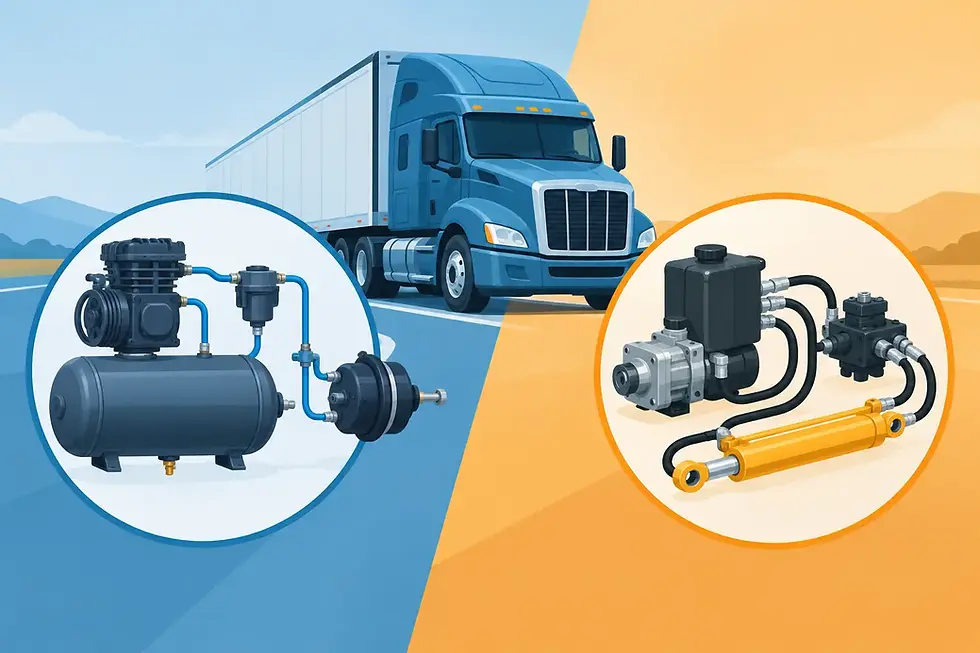
PTO-driven hydraulics are often the preferred solution for cranes, pumps, and other high-demand equipment, but the hydraulic circuit must be matched to the chassis PTO capability and duty cycle. Reservoir size, filtration, hose routing, valve selection, and heat management should be reviewed as part of the body package rather than treated as separate procurement items.
Select Materials for the Mine Environment
Steel remains a common choice for mining service bodies because it provides high strength, repairability, and value for demanding work. The right grade and thickness depend on the body structure, intended payload, and corrosion exposure. High-wear floors, work decks, and tray sections may require thicker plate or wear-resistant material, while compartment doors and non-structural panels can often use lighter material to preserve payload.
Aluminum can reduce body weight and increase useful payload, particularly where corrosion resistance and fuel efficiency are priorities. However, it is not automatically the best choice for severe impact zones or applications involving frequent heavy component loading. Mixed-material construction can be effective when used carefully, but it requires sound engineering around joining methods, vibration, and galvanic corrosion.
Surface preparation and coating should receive the same scrutiny as the steelwork. Mine dust, moisture, chemical exposure, and stone impact can quickly damage an inadequate finish. Specify the coating system according to the operating environment, including corrosion protection for undersides, subframes, fasteners, hinge points, and areas behind tanks or equipment mounts.
Build the Layout Around Technician Safety
A body can be structurally strong and still create unsafe work conditions. Technicians need secure access to tools, fluids, electrical controls, and elevated deck areas without climbing over loose equipment or reaching through crowded compartments. Door opening direction, drawer extension, step placement, grab handles, non-slip surfaces, lighting, and emergency isolation points all affect daily safety.
Compartment design should keep frequently used items within easy reach. Heavy tooling and spare parts should be stored low and secured against movement. Full-extension drawers can improve access, but they must be rated for the load and secured with reliable latches for rough-road travel. Gullwing doors offer weather protection and access in tight spaces, while side cabinets may be more appropriate where the truck must be loaded by forklift.
For service cranes, buyers should specify more than maximum lift capacity. Consider boom reach, lift capacity at working radius, slew range, stabilizer requirements, remote controls, overload protection, and the ground conditions where the truck will be deployed. A crane that lifts the required component only at minimum radius may not perform the actual maintenance task safely.
Lighting is another operational requirement rather than an accessory. Interior compartment lighting, work lights, reverse lighting, warning beacons, and protected electrical routing improve safety during night shifts and low-visibility work. Electrical components should be selected and installed to resist vibration, dust, moisture, and routine washdown.
Do Not Treat Storage as an Afterthought
Mining service trucks carry expensive tools and critical parts that must arrive intact. Well-planned storage reduces search time, prevents damage, and limits losses. The body should have designated locations for hand tools, power tools, consumables, hoses, lifting gear, fire extinguishers, spare parts, and personal protective equipment.
Security should suit the operating location. Lockable compartments, protected hinges, durable seals, and centralized locking can be worthwhile where trucks are parked away from a controlled workshop. Dust and water sealing are equally important. A compartment that looks secure but allows fine dust to enter can damage electrical tools and contaminate critical parts.
External storage areas should also be considered. Pipe carriers, ladder racks, underbody boxes, jerry-can holders, and recovery equipment mounts can free up internal space, provided they do not compromise access, visibility, or compliance with vehicle width limits.
Evaluate Supplier Capability Beyond the Fabrication Shop
Mining service body procurement often involves more than body fabrication. It may require hydraulic power units, PTOs, pumps, cylinders, tanks, hose assemblies, pneumatic controls, cranes, lighting, and custom brackets. Coordinating these items through multiple suppliers can introduce interface problems, delivery delays, and unclear accountability.
A capable OEM supply partner can coordinate the body and its supporting systems against a single approved specification. This is especially valuable for international buyers sourcing to drawings, adapting an existing fleet standard, or developing a private-label product range. Ningbo Han Valley International Trade Co. supports this approach with customized heavy-duty body solutions and associated hydraulic and pneumatic components for industrial vehicle applications.
During supplier evaluation, review fabrication drawings, material specifications, weld procedures, component brands, quality-control records, and packing requirements. Confirm how the body will be shipped, whether loose equipment is pre-installed or packed separately, and what documentation will be provided for installation and service. For repeat orders, verify that drawings and approved changes are controlled so the second production run matches the first.
Specify for Serviceability and Total Cost
The initial price of a service body is only one part of the decision. Downtime caused by inaccessible fittings, failed door hardware, poor hose routing, or a difficult-to-replace pump can cost far more over the vehicle's life. Buyers should look for practical service access to filters, hydraulic valves, pumps, electrical panels, and crane components.
Standardized, readily replaceable components are often preferable to specialized items with limited availability. This does not mean choosing the lowest-cost equipment. It means selecting components that suit the duty cycle and can be supported through the fleet's normal maintenance channels. Spare hose assemblies, seals, filters, and critical electrical parts should be considered during the initial body purchase.
The right mining service body keeps technicians productive at the point of work and protects the chassis investment beneath it. When the specification reflects real tasks, real loads, and real site conditions, the truck becomes a dependable part of the maintenance system rather than another piece of equipment waiting for repair.


Comments