
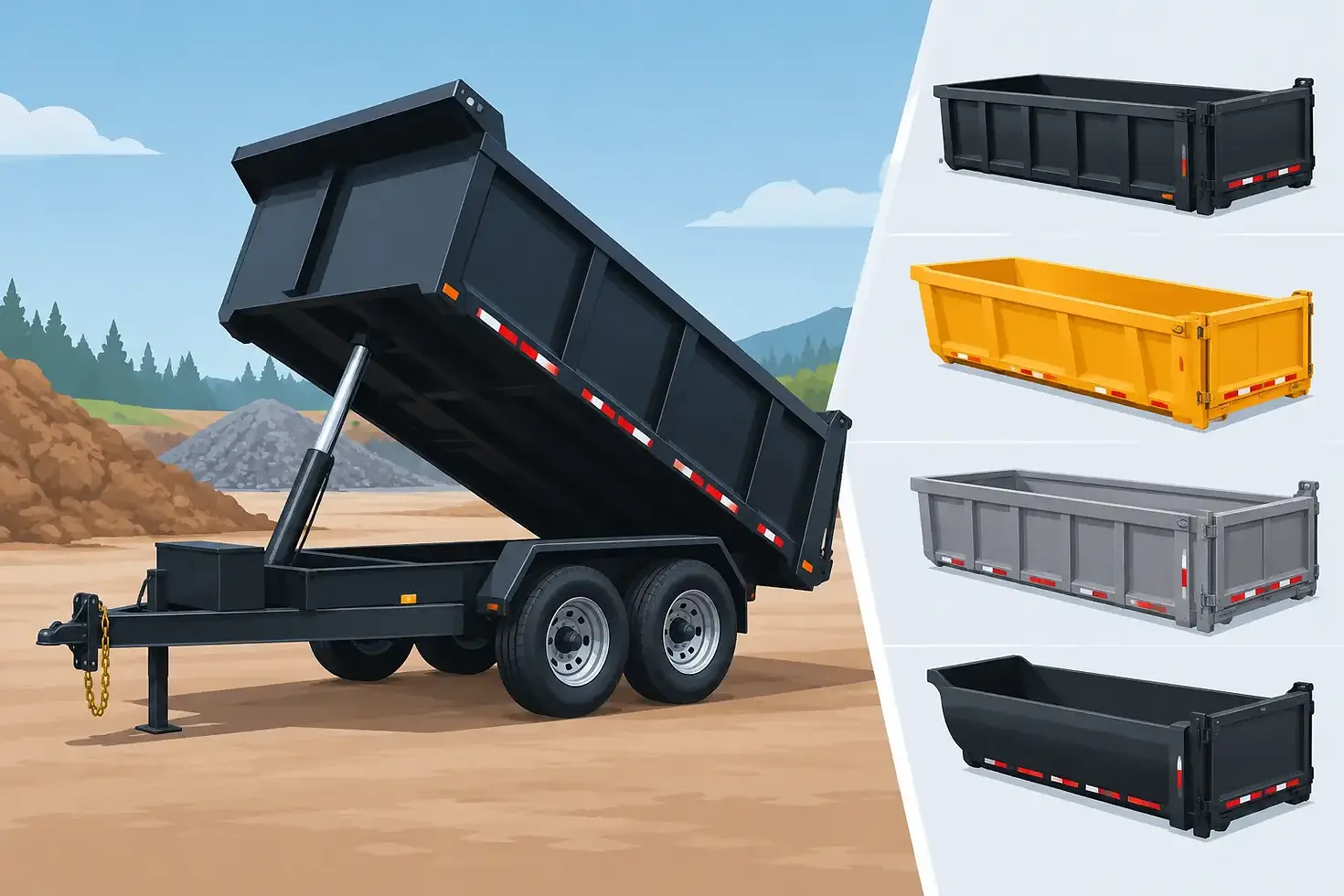
Best Dump Trailer Body Options for Heavy Work

A dump trailer body that looks suitable on a specification sheet can become an expensive mismatch once it is loaded with wet clay, sharp demolition debris, or abrasive aggregate. The best dump trailer body options are determined by the material being hauled, the expected payload cycles, site conditions, and the level of maintenance a fleet can support. For commercial buyers, body selection should begin with the job, not the lowest purchase price.
A well-matched body improves payload efficiency, unloading performance, and service life. It also reduces the avoidable problems that affect uptime: material carryback, floor damage, cracked crossmembers, unstable tipping, and hydraulic systems working beyond their intended duty cycle.
Start With the Material and Operating Cycle
There is no single best body for every dump trailer application. A contractor hauling crushed stone on short runs needs different body characteristics than a waste operator moving light, high-volume material or a mining contractor handling dense, abrasive loads.
Density is the first consideration. Aggregate, sand, wet soil, scrap metal, and demolition waste can reach legal weight limits before the trailer volume is fully used. These operations generally benefit from a body designed around structural strength, wear resistance, and controlled payload capacity. Lighter materials such as green waste, recyclables, wood chips, and municipal refuse usually call for greater cubic capacity, taller sides, and a body shape that sheds material cleanly.
The loading method matters as well. A body loaded by excavator or wheel loader must withstand impact from buckets and dropped material. A body supplied by conveyor may prioritize volume and low tare weight instead. Buyers should provide their supplier with the material type, maximum particle size, typical load weight, loading equipment, unloading frequency, and intended trailer configuration before finalizing a design.
Best Dump Trailer Body Options by Application
Square or Rectangular Bodies for General Hauling
Square-sided dump bodies remain a practical choice for general construction, landscaping, aggregate, and mixed-site work. Their straight walls maximize usable volume and make them easy to configure with high sides, side extensions, tarp systems, ladder arrangements, and various tailgate styles.
For fleets hauling different materials across changing job sites, this is often the most flexible option. The trade-off is that square corners can retain sticky material, particularly wet soil and clay. Floor and wall thickness must also be selected carefully, since flat panels can see concentrated impact and abrasion during loading.
A properly fabricated square body is a dependable choice where versatility is more valuable than the lowest possible tare weight. Structural design should include adequate side bracing, reinforced front sections, correctly spaced crossmembers, and a floor suited to the material being loaded.
Half-Round Bodies for Aggregate and Abrasive Loads
Half-round dump bodies use curved sides and a rounded floor profile to direct material toward the discharge point. They are commonly specified for sand, gravel, crushed rock, ore, and other bulk materials that benefit from smooth unloading.
The curved design reduces internal corners where material can build up. It can also offer favorable strength characteristics because the body shape helps distribute load forces. For operators completing many tip cycles each day, cleaner discharge can reduce carryback and the lost payload capacity that comes with it.
Half-round bodies are not automatically the right answer for every operation. Their shape may provide less practical volume for bulky, irregular demolition debris, pallets, or mixed waste. They are most effective when the primary haul material flows readily and the operating priority is efficient bulk-material discharge.
Smooth-Sided Bodies for Waste and Light Bulk Materials
Smooth-sided bodies are often chosen for waste management, agricultural products, recyclables, wood chips, and other materials where volume is more important than maximum density. Their clean exterior profile can improve appearance and reduce points where debris or moisture can collect.
For high-volume service, body height, sidewall reinforcement, rear opening size, and tarp integration deserve close attention. A taller body increases capacity, but it also raises the center of gravity. This can affect stability on uneven transfer stations, landfill roads, and construction sites. The best design balances cube capacity with safe operating limits and the trailer's axle, suspension, and tire ratings.
When light waste streams include sharp or contaminated items, buyers should not assume that a thin-gauge body will be sufficient. Localized reinforcements, heavier floor sections, protective liners, and stronger tailgate structures may be justified even where average payload weight is low.
Heavy-Duty Demolition Bodies for Severe Service
Demolition and scrap operations impose some of the hardest conditions on a trailer body. Loads can be uneven, sharp, oversized, and dropped from height. Concrete pieces, rebar, steel offcuts, and mixed debris create impact loads that are very different from a uniform load of sand.
A severe-service body commonly requires thicker floor plate, reinforced upper rails, stronger sidewalls, closely spaced crossmembers, and additional protection at the front bulkhead and rear hinge area. The tailgate design must be selected for the discharge method and material. A high-lift gate may suit some bulky loads, while a barn-door or swing-gate arrangement can be more appropriate where controlled access is needed.
Adding steel everywhere is not always the best solution. Excessive body weight reduces legal payload and increases fuel consumption. The practical approach is to reinforce the areas exposed to impact and abrasion while keeping less critical panels appropriately engineered for the expected duty cycle.
Steel, Aluminum, and Wear Protection
Material selection has a direct effect on tare weight, durability, repairability, and purchase cost. Steel remains the standard choice for demanding aggregate, demolition, mining, and construction use. It handles impact well, can be repaired by qualified fabricators, and allows targeted use of high-strength or abrasion-resistant plate in floor and wall areas.
Aluminum bodies can offer meaningful weight savings, allowing more payload in applications governed by gross vehicle weight limits. They are often well suited to lighter bulk commodities, agricultural products, and waste streams. However, aluminum is not simply a lighter replacement for steel. Its design must account for different fatigue behavior, repair requirements, and vulnerability to severe point impacts.
Wear liners are another important decision. A liner can extend floor life and reduce material sticking, but it adds weight and may affect body dimensions. For highly abrasive materials, selected wear plate in the floor, lower sidewalls, and tailgate can be more cost-effective than replacing an entire body prematurely. For sticky materials, a low-friction liner may improve release performance, although it must be compatible with the operating temperatures and loading conditions.
The Body Must Work With the Hoist and Chassis
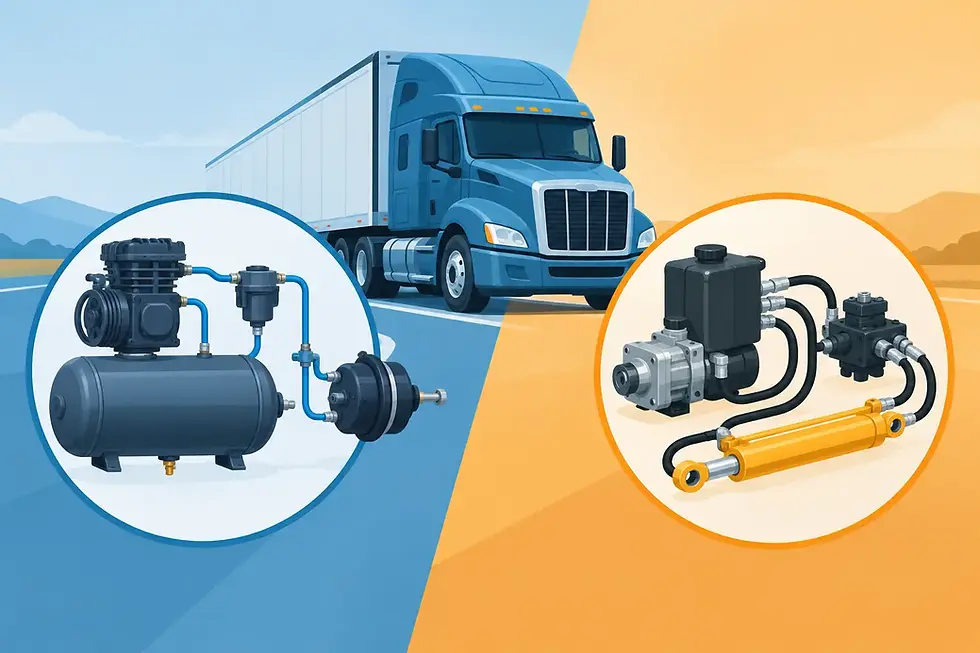
A dump body is only one part of the tipping system. Hoist selection, hinge position, subframe design, hydraulic cylinder capacity, PTO, pump flow, reservoir sizing, hoses, valves, and controls must be matched as one engineered package.
Longer bodies, high sidewalls, and materials that cling to the floor can require greater lifting force and careful attention to stability. A body that raises quickly but is poorly balanced can create safety risks. Conversely, an oversized hydraulic system can add unnecessary cost and complexity. The goal is controlled, reliable tipping under the heaviest anticipated operating condition.
Buyers should also review rear hinge construction, pivot bushings, grease points, body prop provisions, tailgate latch systems, and electrical routing. These details are often overlooked during purchasing, yet they strongly affect field maintenance and operator confidence. A supplier capable of coordinating fabricated bodywork with hydraulic and pneumatic components can reduce specification gaps between the body builder and the vehicle integrator.
Specification Details That Protect Uptime
The best dump trailer body options should be evaluated beyond overall length, width, and capacity. Floor thickness, wall thickness, crossmember spacing, upper rail design, front wall reinforcement, and tailgate construction should be documented against the intended use.
Corrosion protection is equally relevant for fleets operating near salt, fertilizer, chemicals, or coastal environments. Paint systems, surface preparation, drainage points, sealed sections, and material compatibility all influence long-term ownership cost. A lower-cost body with weak coating preparation may require repairs much earlier than expected.
Custom features should be selected because they solve a real operational problem. Common requirements include sideboards, tarp bows, grain chutes, access ladders, inspection steps, toolboxes, rear mudguard supports, lighting brackets, tie-down points, and custom hydraulic connections. Ningbo Han Valley International Trade Co. can coordinate body fabrication and supporting systems to customer drawings or application requirements, which is particularly useful where a standard trailer body will not fit an established fleet configuration.
Choose a Body Around Total Cost of Ownership
The purchase decision should account for more than body price. A lower tare weight may increase payload revenue. Better material release may shorten turnaround time. Reinforced wear zones may prevent costly downtime. Standardized hinges, cylinders, hoses, and fittings can simplify spare-parts planning across a fleet.
Ask suppliers for clear drawings, material grades, plate thicknesses, welding requirements, coating specifications, hydraulic details, and stated payload assumptions. For OEM and fleet buyers, this documentation provides a better basis for comparison than a general description such as heavy-duty or premium construction.
The right body is the one that carries the real load safely, unloads predictably, and stays serviceable through the work your operation actually performs. That is where a carefully specified dump trailer body becomes an operating asset rather than another recurring maintenance issue.


Comments